BCI Board Nominee Spotlight: Rina Singh MBCI
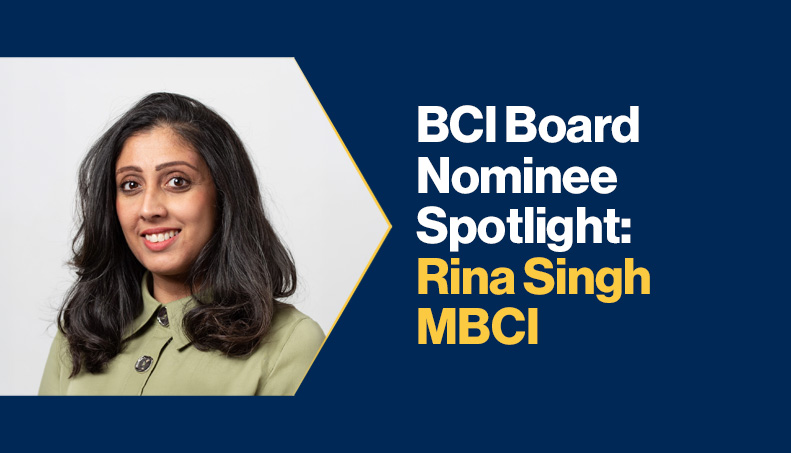
About the nominee
I am a multi award-winning resilience leader and Head of Business Resilience at Smart DCC, where I lead resilience capability within Critical National Infrastructure. Since entering the profession in 2013, resilience has been more than a career. I have grown alongside the profession, learning from it, contributing to it and helping shape parts of it.
Through the BCI, I progressed from Committee Member to Vice Chair and Chair of Women in Resilience, helping expand its reach, profile and impact. I have also contributed as a Professional Advisory Group member, awards judge, mentor, speaker, podcast host, master of ceremonies, London Chapter volunteer and advocate for the profession.
Beyond my professional role, I founded the RESILIENCEPOD® podcast, creating a global platform that connects practitioners, challenges thinking and brings new voices and perspectives into the resilience conversation.
Over the last decade, I have experienced the profession from almost every angle: practitioner, mentor, volunteer, community leader and advocate. That experience has shaped a simple belief: resilience deserves a stronger voice in leadership, strategy and decision-making. I want to help the BCI continue elevating the profession and ensure resilience is recognised not simply for managing disruption, but for building the capability, confidence and judgement that enable people and organizations to navigate uncertainty and succeed.
Prior board or governance experience
I served as a Board Member (Governor) at Hertford Regional College from November 2017 to March 2019 and was a member of the Audit & Risk Committee. The role provided valuable experience of governance, strategic oversight, organizational risk and the further education sector. As a governor, I had opportunities to engage with students, academic staff and senior leaders, helping me gain a broader understanding of the challenges, opportunities and responsibilities involved in supporting educational outcomes and organizational success.
Through my involvement with the Audit & Risk Committee, I developed a greater appreciation of governance, assurance, risk management and the role of constructive challenge in supporting effective decision-making. This experience strengthened my understanding of board responsibilities, stakeholder engagement and organizational leadership, and continues to inform my approach as a resilience professional and leader today.
Why serve on the BCI board?
Resilience is often expected to deliver strategic outcomes, yet it is not always afforded strategic influence. Organizations increasingly recognise its importance, yet resilience professionals are still too often invited into conversations after disruptions occur rather than when the decisions that shape resilience are being made.
What interests me most is how the Institute continues to shape the profession, strengthen its influence and ensure resilience earns its place in leadership, strategy and decision-making.
In my view, resilience has outgrown its traditional boundaries. Its value is not limited to preparedness, response or compliance. At its best, resilience strengthens judgement, builds confidence and enables better decisions.
Having invested in the profession as both a practitioner and contributor, I have seen resilience through multiple lenses and understand the barriers that often limit its influence.
I want to help the BCI continue challenging convention, broadening perspectives and elevating the profession. My ambition is simple: to help ensure resilience is recognised not simply for managing disruption, but for building the capability, confidence and judgement needed when uncertainty demands action.
What skills and experience do you bring to the BCI Board?
I bring a combination of strategic leadership, governance experience and resilience expertise gained within a complex and highly regulated environment.
At Smart DCC, I have helped elevate resilience from a specialist discipline to a board- and executive-level priority. By strengthening relationships, building organizational capability and focusing on practical outcomes, I have increased the visibility and influence of resilience across the organization and helped embed it as a shared responsibility rather than a standalone function.
I have built and led a high-performing, award-winning team and regularly engage executive and board stakeholders on resilience and crisis management matters. This has given me valuable experience in influencing decision-making, driving organizational change and translating complex challenges into strategic priorities.