BCAW+R 2026: A Guide to Crisis Exercises
Please note that this resource is exclusive to BCI Members only. If you are a member please login into your website account to download this resource.
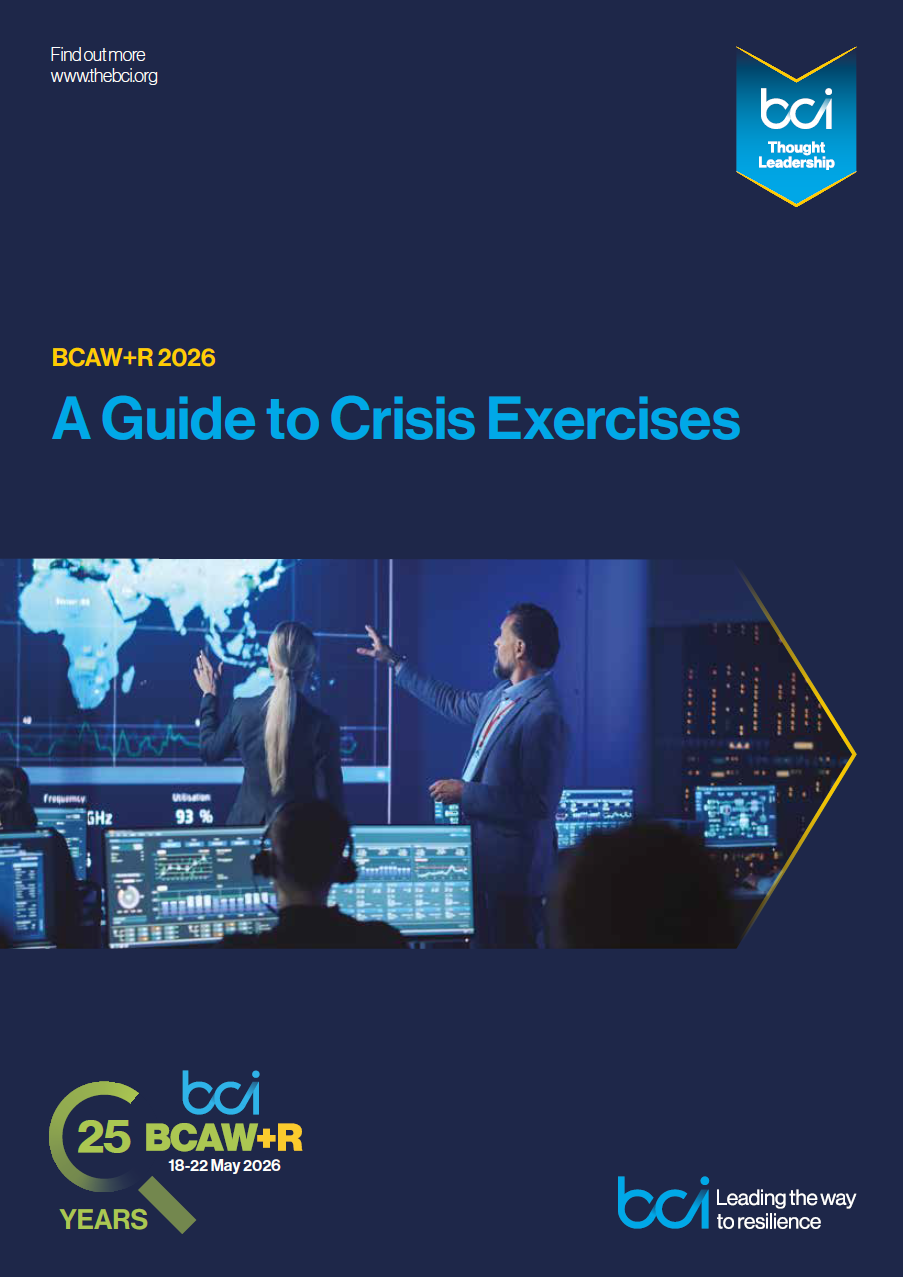
Exercises apply to a range of scenarios, from operational disruptions to events that require a strategic response. Crises belong to the latter category; therefore, a crisis simulation will test response and recovery measures towards a high impact event that can potentially threaten the entire organization.
Crisis management guidelines and standards build on this point, describing crises as situations that demand fast and effective decisions in conditions of ambiguity and incomplete information. In such conditions, preparedness must leverage rehearsed mechanisms that support the designing and planning of resilience strategies.
Crisis simulations must be practical, since they are designed as controlled recreations of real events, allowing participants to experience crises in a safe environment. Through this process, organizations can analyse how decisions are made, how information is communicated and how resources are deployed. This is especially important in a context where risks are increasingly interconnected. Scenarios are important and they should be relevant to the organization; however, it should be remembered that the goal of an exercise is not to represent every possible threat that may occur but to test internal response dynamics. In other words, the objective is to develop some sort of resilience muscle memory that will come into play regardless of the scenario.
To provide guidance to practitioners, this document contains a practical framework for designing and delivering crisis simulations. It combines established standards and operational methodologies to support the development of exercises that are realistic, structured and focused on capability.
 Join now for full access or login to continue reading