
Summer 2027 Resilience Readiness: Mapping Wildfire & Heatwave Dependencies
Please note that this event is only for BCI Corporate Members. Please login to register for this event.
Thought Leadership Webinar Series. Session 4: Summer 2027 Resilience Readiness: Mapping Wildfire and Heatwave Dependencies and Stress-Testing Critical Decisions
As organizations prepare for summer 2027, wildfires and prolonged heat waves must be treated not only as physical hazards, but as systemic threat capable of disrupting people, facilities, power, cooling systems, telecommunications, transport, supply chains and critical third parties simultaneously.
This webinar will provide Business Continuity and Operational Resilience professionals with a practical framework for reviewing and adapting dependency maps to reflect wildfire and extreme-heat exposure, cascading impacts, geographic concentrations, single points of failure and changing recovery assumptions.
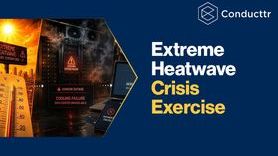
It will also demonstrate how to design a high-stress internal exercise that moves beyond validating documented plans and tests whether leaders can make timely, high-consequence decisions under conditions of incomplete information, conflicting priorities, and rapidly escalating disruption before those decisions have to be made during a real crisis.
We look forward to welcoming you.
Speakers:
-

Maria Florencia Lombardero Garcia
Thought Leadership Manager, The BCI
-

Marios Stavrou
Head of Operations SupportCY , Bank of Cyprus
Marios Stavrou is an enterprise resilience and business continuity professional specializing in high-pressure executive exercises, crisis management, emergency response critical infrastructure resilience and decision stress testing. With more than 15 years of operational and crisis management experience, he has designed, led and evaluated 55+ large-scale tabletop, simulations and field exercises internationally, engaging executives, public authorities, emergency services and critical infrastructure operators. His experience is grounded in direct participation in dozens of real-world incidents, including wildfires, floods, industrial emergencies, infrastructure failures, cyber disruption and complex humanitarian operations. This operational exposure enables him to build realistic scenarios that reflect how crises escalate, how dependencies fail and how leadership decisions affect operational continuity. His work focuses on:
- Executive decision stress testing
- Critical infrastructure and supply-chain resilience
- Dependency and cascading-impact mapping
- Business continuity and operational resilience
- Cyber-physical and multi-hazard scenarios
- Crisis leadership, coordination and command structures
- Exercise evaluation and actionable improvement planning.
Marios has worked with organizations and institutions across the energy, utilities, healthcare, transport, public sector, manufacturing and critical infrastructure sectors, combining international resilience standards with realistic operational experience. His approach is simple: do not only test the plan, test the decisions, assumptions and dependencies that determine whether the organization can continue operating under pressure.
More on