The Future of Resilience Is Strategic
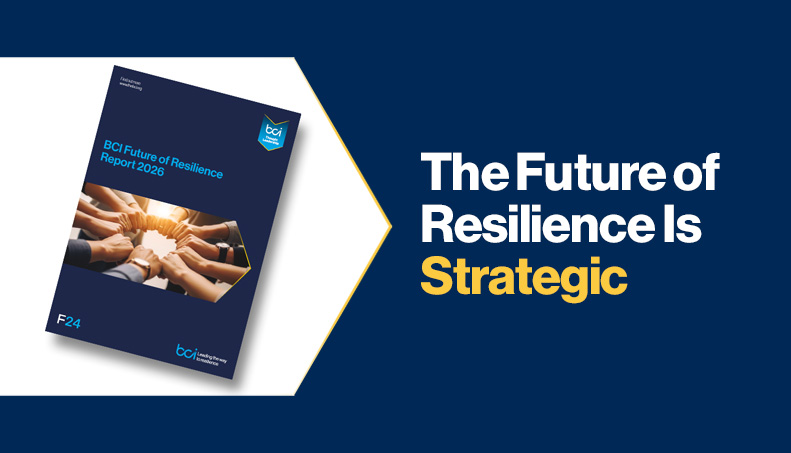
The new BCI Future of Resilience Report 2026, with the support of F24, reveals a hopeful resilience profession who see a reinvention of business continuity and resilience functions as strategic enablers.
This new global study of resilience practitioners shows a profession that expects a dramatic shift in how it is perceived and how it is structured in organizations. Over the next ten years it is expected to move from a defensive, compliance-driven function to a recognised driver of strategic value.
According to the Future of Resilience Report 2026, 59.1% of practitioners today still see resilience primarily as a risk mitigation function, with 53.2% viewing it as a regulatory necessity and 41.7% as a straightforward cost. However, within a decade the same respondents foresee a dramatic change with 59.1% expecting resilience to be recognised chiefly as a value creator and strategic enabler, with the "risk mitigation" and "cost" framings falling to 24.3% and 12.2% respectively.
This shift in perception is also expected to be matched by a shift in organizational structure. More than half of respondents anticipate a dedicated Chief Resilience Officer, or equivalent, becoming a standard senior role within the next decade, while around a third expect the function to be folded into an existing C-suite position. The report finds the skills defining this next generation of leaders are shifting too with strategic leadership, data analytics, and AI literacy overtaking traditional technical expertise as the most critical capabilities for the future resilience professional.
The role of technology
Technology is central to this transformation. AI-driven predictive analytics was named by 88.3% of respondents as the technology set to have the greatest impact on the industry, ahead of automation of continuity processes (55.9%) and cyber resilience integration (51.3%). Practitioners largely expect AI to enhance and augment existing tools and transform resilience activities broadly, rather than automating narrow, individual tasks.
There are issues to be addressed. The report shows that metrics remains the discipline's most urgent unresolved challenge, citing issues around linking resilience to strategy, and quantifying return on investment. Until practitioners can demonstrate value in financial terms, the report warns, the move from cost centre to strategic enabler will remain aspirational for many organizations. Compounding this, 93.9% of respondents expect regulatory pressures, particularly around cyber and digital resilience and AI governance, to intensify significantly, incentivising support for resilience measures. Additionally, nearly three-quarters of respondents expect investment in resilience to rise over the same period.
The risk landscape shift
The risks practitioners expect to face in ten years look also markedly different from those that have traditionally defined the business continuity field. The top five risks of the future contain elements of systemic shocks, whether this happens in the digital, environmental or supply chain domain. This shift has moved decisively toward systemic and geopolitical threats, with geopolitical and socio-political instability now cited as the single biggest risk of the next decade, ahead of technology and AI-related risks and climate and environmental risks.
Maria Garcia, Thought Leadership Manager commented: “Resilience is moving from an operational function to the boardroom. Our research points to a profession ready to move beyond risk mitigation and compliance to become a genuine source of strategic value. AI, predictive analytics and increasingly systemic risks will accelerate that transformation. But the next challenge is clear: resilience professionals must demonstrate their value in terms that the wider business understands. The future of resilience is not simply about protecting organisations from disruption; it is about helping them navigate uncertainty, make better decisions and turn resilience into a strategic advantage.”
“What stands out from this research is the direction in which the resilience profession is evolving. Practitioners clearly see their role becoming more strategic, more connected to the business and more influential in the decisions organisations make” said Steffi Hauer, Senior Vice President Commercial BU Resilience, F24.
The Future of Resilience Report 2026 is based on a global survey of resilience practitioners across industries.
Download your copy today
More on