BCI World Hybrid 2026 Preview: Why Exercising Is About More Than Testing Plans
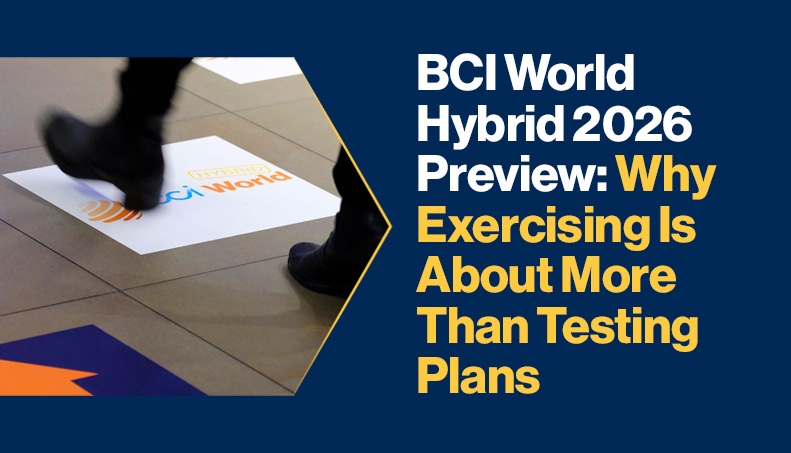
On Wednesday 11 November at BCI World Hybrid 2026, Helen Walls, Customer Success Manager at Conducttr, will challenge a common misconception in resilience management: that exercising is simply about testing plans. Helen will argue that in an environment where disruption has become a regular feature of organizational life, exercising should be viewed not as a compliance activity, but as a strategic tool for improving decision-making, coordination and organizational performance.
Moving beyond compliance
For many organizations, exercises are still conducted primarily to satisfy governance requirements or demonstrate that plans work on paper, but evidence increasingly suggests that real value lies elsewhere.
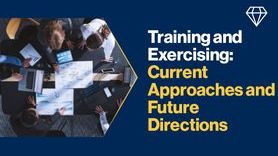
The BCI's recent white paper Training and Exercising: Current Approaches and Future Directions[1] shares insights into what practitioners are doing today and concludes with recommendations grounded in their experience.
Crisis leadership and decision making
The white paper found that effective exercising helps organizations develop the leadership skills that matter most during a crisis: judgement, communication and adaptability.
Training is particularly important at senior levels and, as a result, practitioners recommend that organizations train leadership teams regularly, recognising that resilience capability cannot be built through an annual exercise alone. A related practice is training people one level above their current role, giving some operational staff exposure to strategic leadership.
A UK based operational resilience practitioner said: “Train leadership more than once a year. Building capability at the top cascades through the rest of the organization over time.”
Well-designed exercises create opportunities to strengthen these capabilities and over time, it can improve decision quality, accelerate response times, and strengthen organizational confidence during disruption.
Short and simple wins the race
Another barrier organizations often face is the belief that exercises must be large, disruptive and resource-intensive to be worthwhile, but research suggests the opposite.
Short, realistic and manageable exercises are often more sustainable and can deliver significant value when conducted regularly, especially when time-pressured leaders are taking part. Practitioners interviewed believe that an important threshold appears to be around two hours. Most teams can accommodate an exercise of that length, but once it runs significantly longer it starts to feel like a major disruption rather than a manageable development activity, which damages both participation and goodwill for future sessions.
Ultimately, the purpose of exercising is not to test whether a plan exists. It is to prepare people to make better decisions when the unexpected happens. The white paper's findings show that organizations gain the greatest value when exercising is embedded as an ongoing development activity that builds leadership capability at every level.
In this keynote, Helen Walls will demonstrate why exercising deserves a place in boardroom conversations, not simply as a resilience requirement, but as a driver of organizational performance.
Join us on Wednesday 11 November to learn how exercising can strengthen decision-making, accelerate response and help position resilience as a source of competitive advantage.

More on