
The Widening Divide Between Business Continuity and Resilience and a Growing Gap Between Ambition and Action
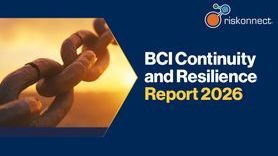
The new released BCI Continuity and Resilience Report 2026, kindly sponsored by Riskonnect, has found that organizations are increasingly treating business continuity and resilience as distinct but complementary functions. However, many struggle to translate that distinction into real structural change. The findings point to a profession in transition, where strategic ambition is outpacing the governance, collaboration and support structures needed to realise it.
According this year’s data, the share of organizations reporting a clear difference between business continuity and resilience rose to its highest in record, from 39.4% in 2023 to 53.1% in 2026, a 13.7 percentage point increase, while those seeing no difference fell from 50% to 37.4%.
With a changing profession there is also a change in the skill set required from practitioners. Business continuity managers are valued above all for professional qualification (91.5%), planning ability (89.1%) and empathy (86.2%), pointing to an operational, execution-focused identity. Resilience managers, by contrast, are prized for conceptual thinking (86.4%), strategising (83.6%) and the ability to see the bigger picture (79.5%) — hallmarks of strategic leadership.
This divergence is also echoed in how strategic each role is perceived to be: the business continuity manager's strategic score has declined from 58.8% in 2021 to 50.9% in 2026, while resilience managers now score 54.4%, firmly ahead.
The research also highlights a persistent gap between current practice and future priorities. Coordination with other risk disciplines and supply chain disruption assessment remain among the weakest reported outcomes today, yet cross-team collaboration (84.4%) ranks among the aspects practitioners expect to grow most important over the next five years — trailing only senior management attention (92.2%) and board-level support (85%).
Interest in the role of the Chief Resilience Officer has continued to grow over the past few years. For the first time, the report shows that 1.5% of surveyed organizations have a Chief Resilience Officer holding overall accountability for resilience. While this remains a relatively small proportion, it represents an encouraging step forward and reflects a growing recognition of the importance of aligning resilience efforts across organizations.
The survey also highlights strong support for greater board-level ownership of resilience, with most practitioners expressing a desire to see a dedicated board role responsible for resilience. Encouragingly, this is already standard practice for 28.5% of respondents, signalling positive momentum towards stronger governance and oversight of resilience.
Technology adoption, meanwhile, is accelerating fast. Emergency notification software now leads adoption at 48.8%, but the standout trend is artificial intelligence: AI tool usage has nearly tripled in two years, now used by 24.4% of organizations, up from under one in ten just two years ago.
BCI Thought Leadership Manager Maria Florencia Lombardero Garcia commented: "The data shows a profession actively redefining itself, with resilience emerging as a distinct strategic discipline built on the operational foundation business continuity provides. The challenge now is closing the gap between what practitioners know needs to happen and what their organizations are structured to deliver."
“Resilience depends on the ability to connect teams, information, and decision-making across the business. This year’s findings show why organizations need greater visibility and coordination to respond confidently as risks evolve.” said John Verdi, VP, Professional Services – Resilience & GRC at Riskonnect.
The full report is available
More on
About the author