
BCI Women in Resilience: International Women’s Day 2026 Event
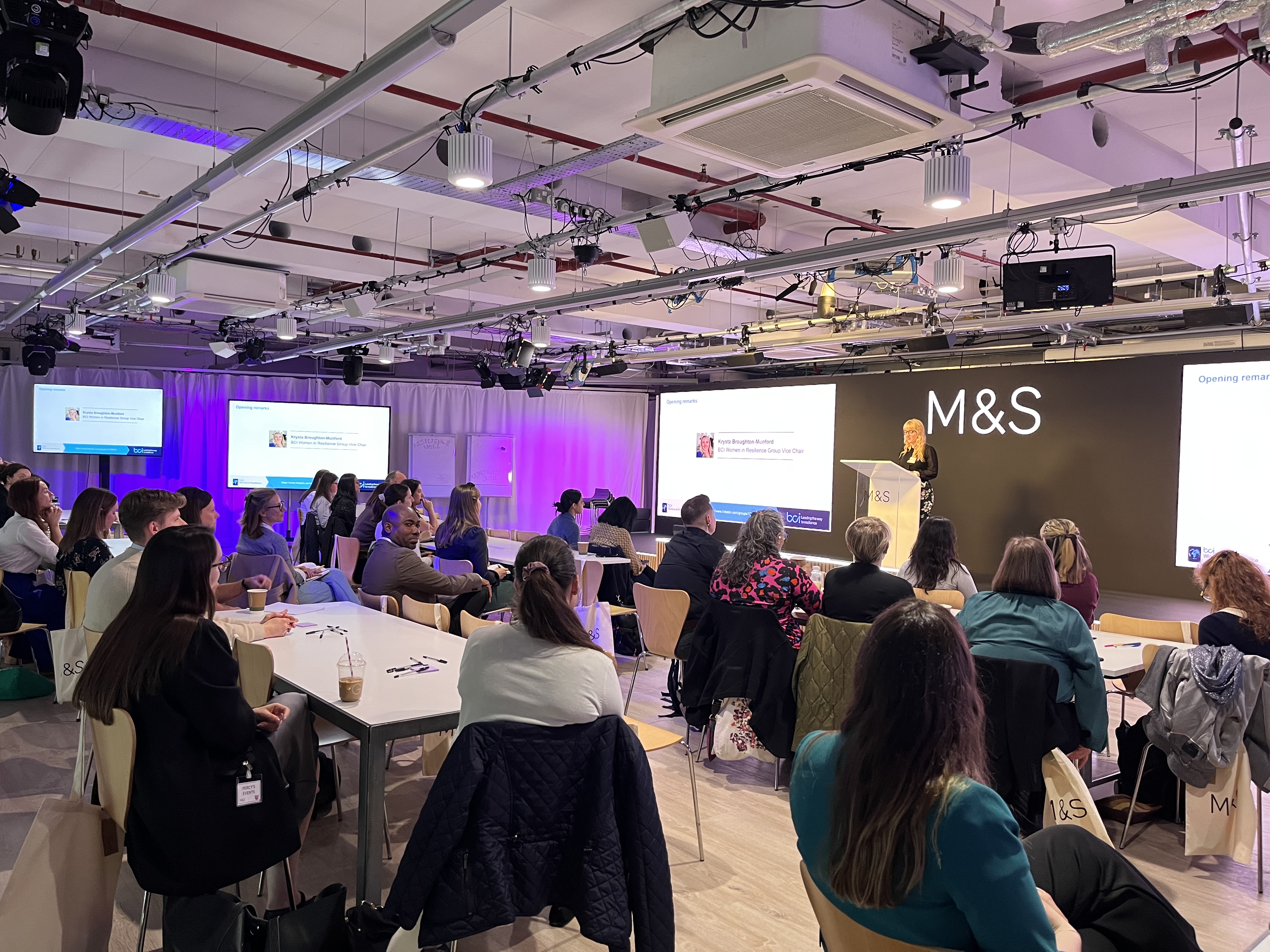
The BCI Women in Resilience International Women’s Day event is a flagship moment in the WiR calendar, bringing together professionals from across the resilience community. On the sunny afternoon of 19 March 2026, this year’s event took place, proudly sponsored and hosted by Marks & Spencer at their Head Office in London whose support helped bring the conversation to life both in person and virtually.
The session was opened by Krysta Broughton-Munford, Vice‑Chair of the Women in Resilience Special Interest Group, who warmly welcomed attendees, thanked our sponsors at Marks & Spencer, and acknowledged the ongoing support from The BCI. Krysta reflected on the importance of creating spaces where women across the resilience profession can share lived experiences, learn from one another, and grow together.
This year’s theme, #GiveToGain – Shaping Resilient Leaders through Shared Knowledge & Collective Growth, was exactly that and set the tone for an afternoon of sharing, learning, and reflection. The event brought together speakers across different walks of resilience, to explore what resilience really looks like — not just in organizations, but in people.
Amanda King on Resilience Under Pressure
Amanda King, Head of Business Resilience at Tesco, opened the speaker sessions with a deeply personal and compelling account of leading through crisis.
Amanda spoke about viewing resilience through the lens of a woman carrying a “triple shift” — leadership responsibilities at work, caregiving at home and the constant cognitive load that sits beneath both. She shared the realities of managing major incidents while being a single parent, including periods where she could not go home for days, juggling childcare, online grocery orders, school logistics and the ever‑present sense of guilt that many working parents recognise all too well.
Drawing on her experience working with the Metropolitan Police, Amanda reflected on her role in managing the late Queen Elizabeth II’s funeral. She explained that even with extensive planning, the reality of the day still brought challenges. Her key takeaway was practical and grounded: preparation builds confidence, but uncertainty is always part of crisis response.
Amanda went on to explore how competence provides the technical foundation and builds trust, but on its own it may not always lead to influence. Confidence allows that expertise to be voiced, particularly for women who may systemically be held back. Collaboration, she noted, is where resilience is strengthened because it is through community that resilience solidifies.
She spoke about crises being defined by one thing above all else: a lack of clarity. In those moments, leaders rarely have complete or accurate information. Decisions must be “good enough”. And that reflection is not optional, it is how resilient leaders (and resilient organizations) are made.
Morgan MacDonald on Flipping the Resilience Design
Morgan MacDonald, Global Health Advisor for Wellness and Mental Health at International SOS, shifted the focus to wellbeing and organizational systems.
Morgan spoke about the systemic obstacles women continue to face at work, drawing from her experience across corporate as well as non‑profit global environments. She highlighted how women often carry dual responsibilities of work and care, increasing stress, fatigue, and exposure to psychosocial risks.
Morgan discussed how many wellbeing initiatives remain poorly integrated — positioned as optional add‑ons rather than core elements of how organizations operate. When health strategies are designed this way, they risk excluding women by default. She highlighted lower psychological safety around disclosing health concerns such as pregnancy, menopause, caregiving pressures or mental health challenges, often driven by fear of being seen as weak or “not up to the job”.
A clear message emerged: psychosocial safety in the workplace is a gender issue. When women faced systemic obstacles such as unequal workload, exclusion from decision-making, unaddressed psychosocial risks, business capability, continuity and client delivery are at risk.
Her call to action was to flip the resilience design — moving away from asking individuals to be endlessly resilient and towards building environments, policies and leadership behaviours that actively support women and improve outcomes for everyone. This includes not just more reporting and transparency around issues in the first place but adapting work arrangements and culture.
John Frost on People‑First Leadership and Growing Resilient Teams
John Frost, Managing Director at Resilience Management Solutions, focused on leadership through a people‑first lens, drawing a clear distinction between managing work and leading people.
John described leadership as moving from being responsible for the job, to taking care of the people responsible for doing the job. Leadership, he said, is a muscle that can be developed over time. It does not require having all the answers, but it does require trust, honesty, and psychological safety.
He shared a number of practical tools and techniques he has used to better understand and support his teams. These included encouraging open conversations about how people like to work, setting shared expectations around communication and using simple development tools such as personal SWOT analyses.
John stressed that technical skills can be taught, but motivation cannot, and that strong leaders focus on what people are good at rather than trying to fix every weakness. He spoke openly about supporting individuals who eventually outgrew their roles, viewing their success elsewhere as a positive outcome of good leadership rather than something to hold onto.
One message strongly resonated with attendees: “If you want to go far, go together.” John reinforced that resilience is built through collaboration, trust, and shared purpose especially after incidents, when the impact on people often lasts long after the technical response is complete.
James Coomber was also due to join the speaker line‑up, bringing his experience in psychological safety, and leading under pressure. Unfortunately, James was unable to attend on the day due to illness. While he could not be with us in person, his perspective and intended contribution strongly aligned with the themes explored throughout the event.
Shared Reflection and Collective Learning
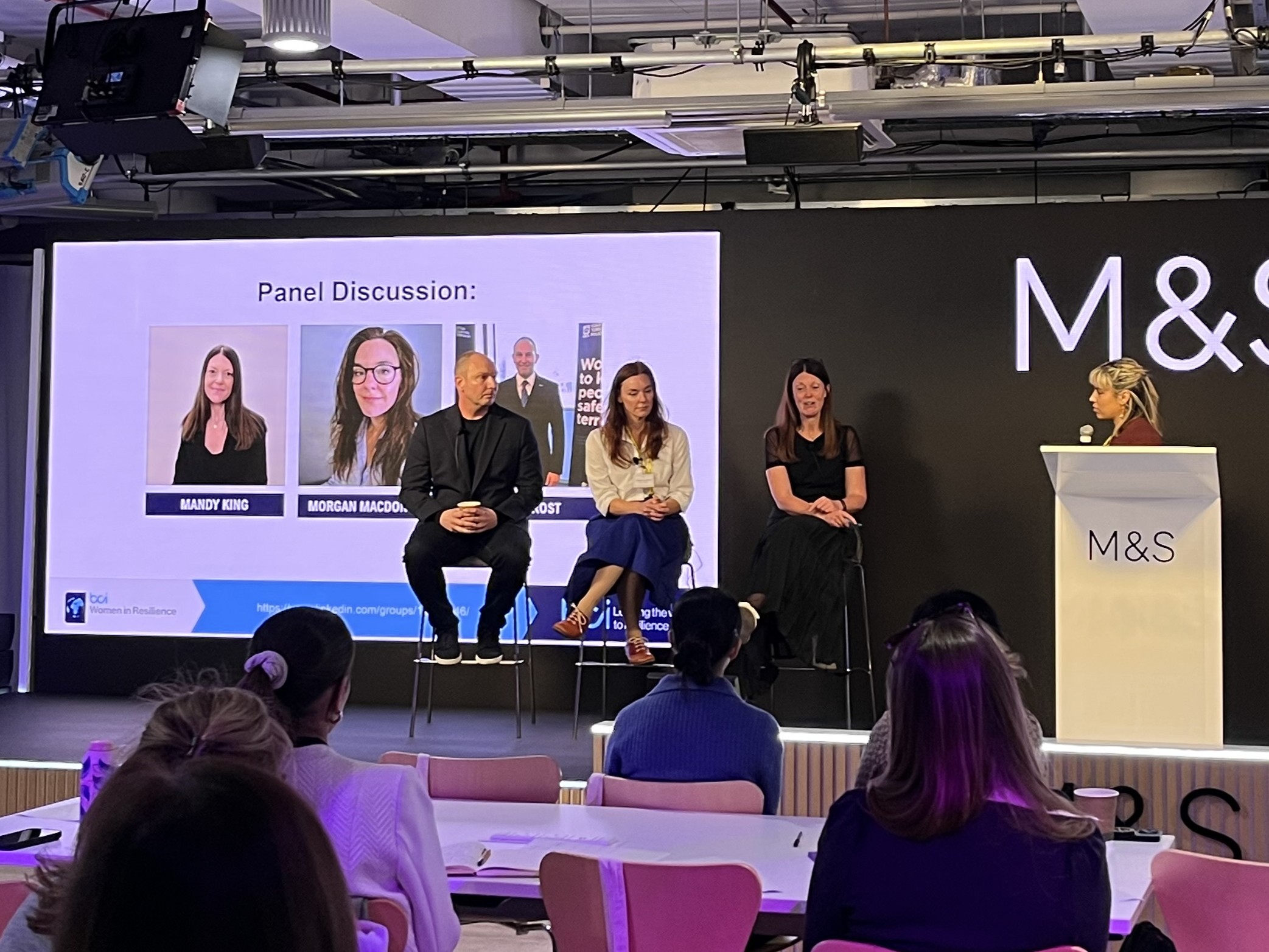
The event concluded with a short panel discussion and Q&A, allowing speakers to reflect together and respond to questions from the audience.
Themes included leadership stereotypes, self‑criticism, reverse mentoring and the need to move away from one‑size‑fits‑all ideas of what a leader looks like. The discussion reinforced the value of empathy, psychological safety and designing resilience that works for real people, in real situations.
Moving Forward Together
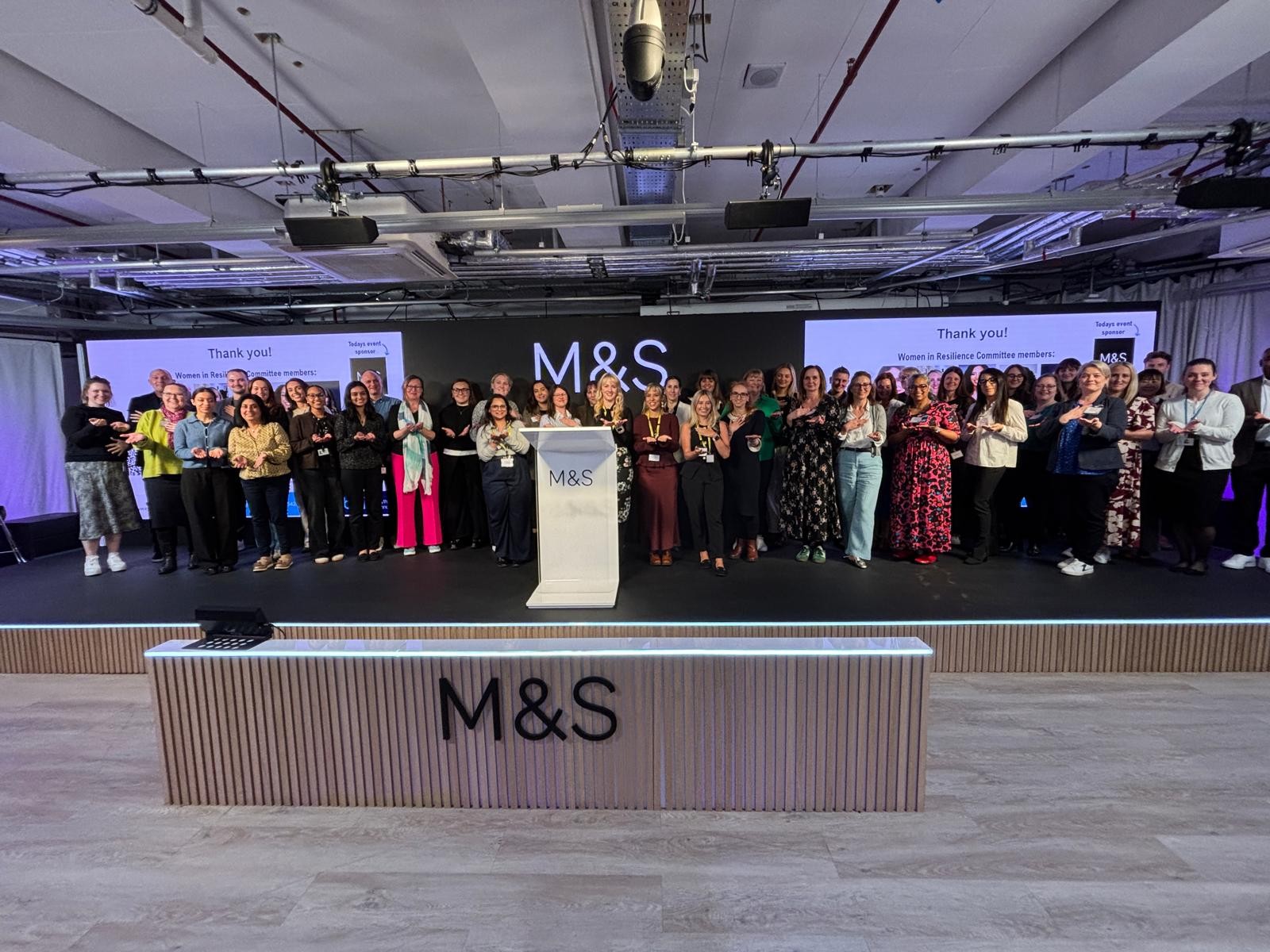
The International Women’s Day 2026 event was a powerful reminder that resilience is not built in isolation. Telling women to simply “be stronger” is not a strategy. Creating environments that support people, value difference and lead with empathy is.
As the theme #GiveToGain highlighted throughout the afternoon, when we share knowledge, we build stronger leaders and make organizations more resilient.
The BCI Women in Resilience International Women’s Day event is a flagship moment in the WiR calendar, bringing together professionals from across the resilience community.
1 of 3
2 of 3
3 of 3
More on