
Building Operational Resilience at a Luxembourg Hospital
Background
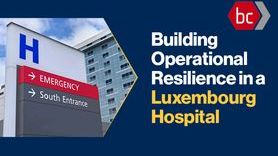
The hospital plays a vital role in providing acute care, specialized medical services, and emergency treatment, ensuring accessible and high-quality healthcare for the local population.
The hospital faced growing exposure to a wide range of threats - natural (floods, storms), technical (blackouts, fires), intentional (cyberattacks, terrorism), and systemic (pandemics, staff shortages). To ensure the hospital’s ability to maintain critical operations during crises, minimize patient safety risks, and guarantee rapid recovery to normal operations a comprehensive business continuity management system (BCMS), aligned with ISO 22301:2019 and national regulations for critical infrastructures, should be established.
Approch
To build an effective BCMS, a comprehensive analysis of the existing structures and potential vulnerabilities of the hospital was first conducted. For this purpose, a root cause analysis (BCM Risk Management) and an impact analysis (Business Impact Analysis), specifically tailored to the healthcare sector, were developed, implemented, and carried out jointly.
The goal was to identify those areas whose failure would most significantly affect hospital operations. Both technical and organizational risks were considered and tested through crisis simulations.
Challenges
Throughout the project, a few challenges occurred that influenced the understanding and implementation of a BCMS within the healthcare environment, including cultural differences, limited understanding of process dependencies, and differing expectations regarding preparedness and response capabilities.
| Cultural Diversity and BCM Approach |
Due to the cultural diversity within Luxembourg, including not only language barriers but also strong French and German influences, different approaches to BCM and emergency as well as recovery planning were observed. These differences were reflected in how BCM topics were understood and addressed. |
| RTO Requirements in the Health Sector |
In the healthcare sector, Recovery Time Objectives - meaning the maximum acceptable time a service can be unavailable - are very short, as any disruption can quickly put patients at risk. Critical services must be restored almost immediately to avoid impacts on life and health. |
| Risk Perception and Process Awareness |
There is often a perception that key processes will not fail, which reduces awareness of potential risks. This made it necessary to have open discussions and actively raise awareness about possible failures and the need for preparedness. |
| Understanding of End-to- End Processes |
While everyone is focused on ensuring continuous patient care, supporting processes were not always seen as part of this goal. Functions such as logistics, supply management, kitchen services, and other support areas were underestimated, making it important to highlight their role in maintaining patient care. |
Findings
As a result of the Business Impact Analyses and Risk Assessments conducted, valuable insights were identified that support the hospital in strengthening its resilience and continuously safeguarding their critical and life-saving healthcare services.
| Ensuring Water Availability |
Installation of a water reserve on the hospital roof to guarantee sterilization of surgical instruments. |
| IT Recovery Planning | Creation and regular testing of emergency IT recovery plans and protocols. |
| Supply Chain Resilience | Increasing stock of surgical clothing to cover up to 48 hours of operations and add a secondary supplier as a backup. |
| Reliable Power Supply | Regular generator tests and diesel quality checks to guarantee readiness during power outages. |
| Backup Communication Systems |
Implementing back ups and workarounds for communication (e.g. handheld radio). |
Solution
By setting up a Business Continuity Management System that follows the ISO 22301 rules, the hospital has made it much easier to stop, deal with and recover from problems. The hospital has a proactive approach. This means that it has been able to keep providing care to patients during difficult times. It has also made it a model for how well other hospitals in Luxembourg can deal with problems.
Effective BCM today must be digital. Only with the right system support can complex interdependencies, processes, and requirements be documented transparently, kept up to date, and reliably accessed in an emergency. At the same time, regulatory demands continue to grow - driven by legal obligations, industry standards, and internal compliance requirements.
Summary
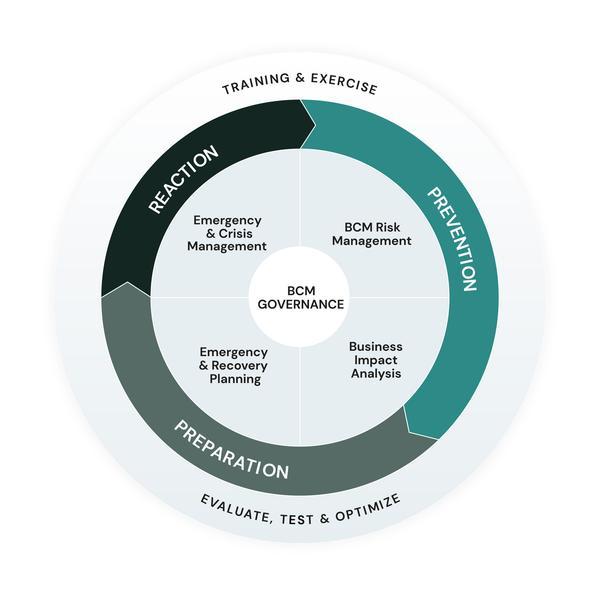
The established BCM framework integrates risk prevention, business impact analysis, crisis management, and recovery planning, aligned with ISO 22301:2019 and national regulations for critical infrastructures. The implementation of a comprehensive Business Continuity Management System has enabled the hospital to significantly strengthen its operational resilience and adopt a proactive approach to unexpected crises. By integrating risk and impact analyses with clearly defined emergency processes and regular testing, the hospital has sustainably improved its ability to maintain critical functions under adverse conditions. In addition to enhancing patient safety and quality of care, the BCMS has supported regulatory compliance and strengthened the trust of employees, patients, and partner institutions alike. Today, the hospital stands as a best-practice example of effective continuity management in the healthcare sector, demonstrating that strategic preparedness, structured processes, and continuous training form the foundation for long-term stability and resilience.
More on
About the author

Gerhard Reismueller
Managing Director
Founder and Managing Director of BC Consulting in Austria and involved in business continuity management for more than 25 years.
As a consultant for business continuity management and consulting for emergency and crisis management, he managed a large number of BCM projects for financial service providers, energy suppliers and infrastructure companies, both in the national and international environment (Germany, Luxembourg, Switzerland, Russia, CEE).
Lecturer on Business Continuity Management at the Danube University Krems and in the OE-RISK program at the University of Vienna.