
BCI Board Spotlight: Des O’Callaghan
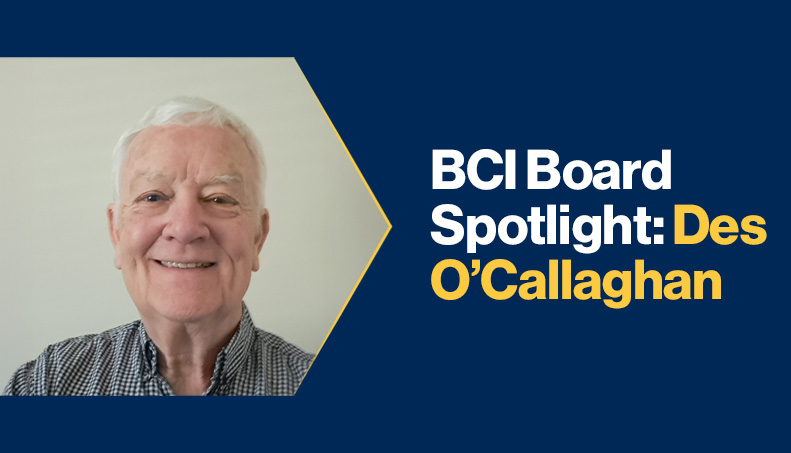
The 2025 BCI Board Elections, held between October and November this year, saw two new Board members elected and one re-election. In this spotlight we speak to newly elected member Des O’Callaghan Hon FBCI.
Could you give us a brief overview of your career experience in the BC and resilience sector?
I began my business continuity journey in 1989 at TD Bank in Canada, where I had previously held roles in Administration and Operations. I managed the then new BRP programme for seven years and later moved on to work at several other financial companies. Along the way, for three years I worked as a salaried consultant and, after talking early retirement from Manulife Financial in 2010, was an independent consultant for 12 more years. In 1996 I became Canada’s first BCI member, awarded Fellowship upon entry. I have subsequently been a long-time volunteer and ambassador for the BCI, contributing in a wide range of roles, including membership assessment, chapter leadership, awards and numerous education initiatives.
What do you feel you can bring to the work of the board?
What I think I bring in abundance is a deep appreciation of the crucial balance needed to embrace change and innovation while remaining securely moored to the core principles on which the BCI was founded. In a sense, the more things change, the more they stay the same. The profession certainly has challenges ahead and in a period of demographic shift, it is vital we stay the course, allowing new developments, AI being an obvious example, to help us, not harm us.
What particular issue(s) would you like to see raised on the organizational agenda during your tenure?
For me, being in a very large country on another continent, finding ways to promote local member engagement is most important. Central Office does a wonderful job supporting chapters, but thanks to GDPR there are obstacles in communicating effectively with our own members. Finding ways to empower local engagement, especially through in-person events, should remain a high priority.
What do you feel are the most pressing business continuity and resilience challenges?
AI appears to be the latest challenge, although I think it should be viewed more as another opportunity. For a long time, I have felt knowledge transfer between generations is a mounting, but necessary, challenge and age demographics are relentless. Innovation will come more from younger professionals, so it is our duty to provide leadership through education, while safely handing over the reins.
What inspired you to contribute the BCI in a volunteer capacity?
I was first attracted to the BCI because it did not include “disaster” or “recovery” in its name. As an early proponent of proactive, risk-focused planning, I was keen to share my experience and insight with others. At a time of great growth in the profession, it was very rewarding, personally, to help that growth through forging best practice, presenting at conferences, assisting with the creation of the Good Practice Guides, helping to form a chapter and other initiatives. Being a serial volunteer, I am hoping membership in the global board will be a culminating achievement.
What piece of advice can you share for others who would like to be involved in the governance of BCI?
There are many opportunities to contribute to BCI governance, and they don’t all require lengthy experience. Just the willingness to give and share goes a long way. Membership assessment, awards judging, active participation in chapters and special interest groups are some of the ways to give back to the BCI. In doing so, you will find you get a great deal in return, not least the satisfaction of being part of something bigger than just your own career.
More on
About the author

Desmond O'Callaghan
Retired Consultant
Des is a mostly retired business continuity management professional with 33 years of experience in the field. His career included roles as a corporate program leader in several financial institutions as well as extensive independent consulting. A skilled instructor and facilitator, he has built a strong reputation for developing and delivering training, seminars, workshops and conferences throughout his career. He regularly consults on and contributes widely to many BCI initiatives and is currently Lead Assessor for the BCI as well as Leader of the Canadian Chapter.